
Watts & Co. – the family firm
Watts & Co. was founded in London in 1874 by three architects: George Frederick Bodley, Thomas Garner and George Gilbert Scott Junior, the son of Sir George Gilbert Scott. They wanted a firm that supplied furnishings as bold and well made as their buildings, from church textiles and vestments to wallpapers and furniture for fashionable houses.
Today my sister and I run the firm, the fifth generation of the family, and it has split into two sides:
Watts & Co.
Ecclesiastical furnishings: vestments, church textiles and furnishings. wattsandco.com →
Watts 1874
Fabrics, wallpapers, murals and passementerie, drawn from the firm’s archive of historical designs. watts1874.co.uk →
From the workroom: hand embroidery
Watts & Co. has been known for church embroidery since 1874, and it is still stitched by hand in our London workroom. Here are a few pieces I am particularly fond of: a green frontal and a pelican chasuble from the workroom, and three embroideries on display in the gallery at Liverpool Cathedral, which Sir Giles Gilbert Scott designed.
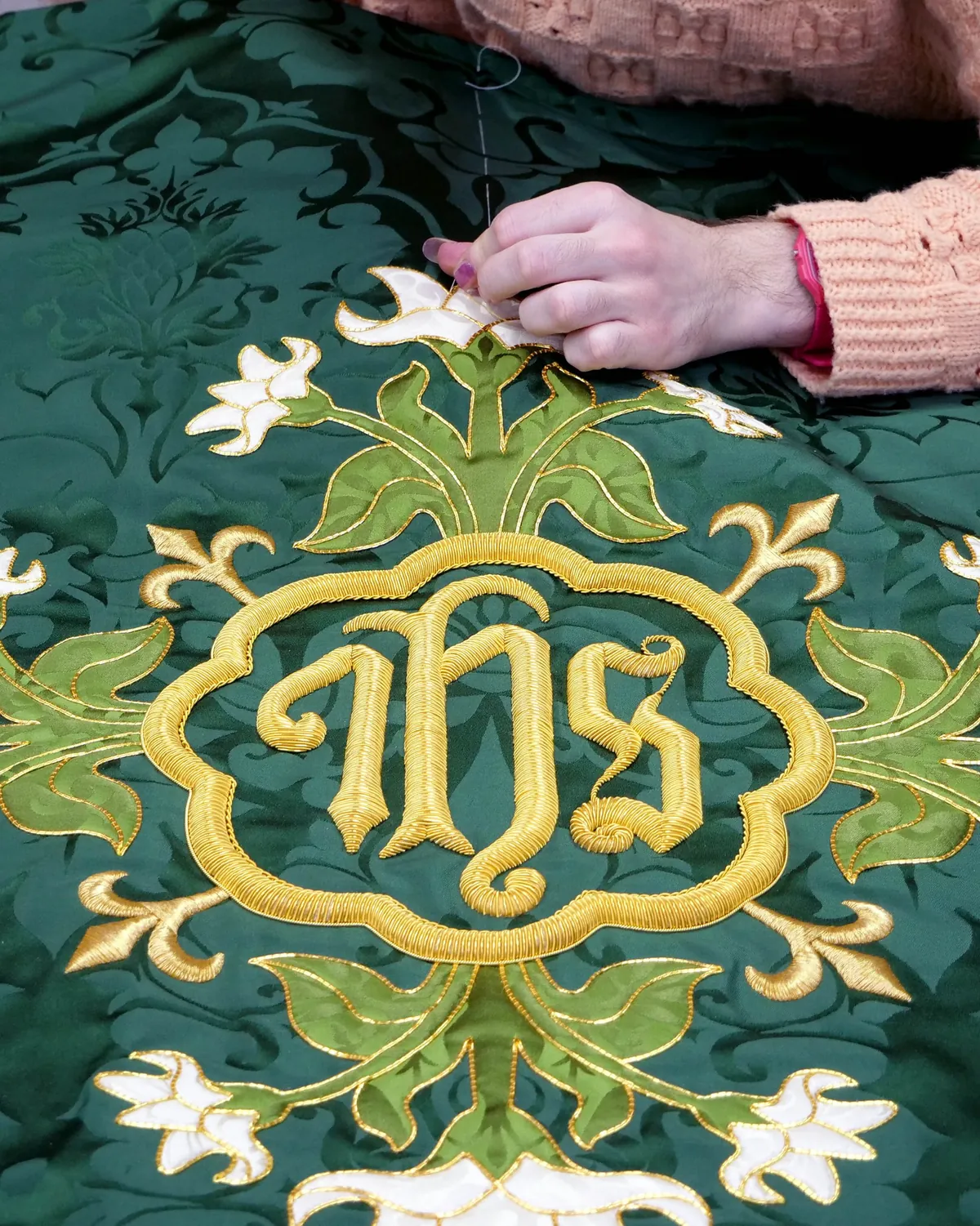
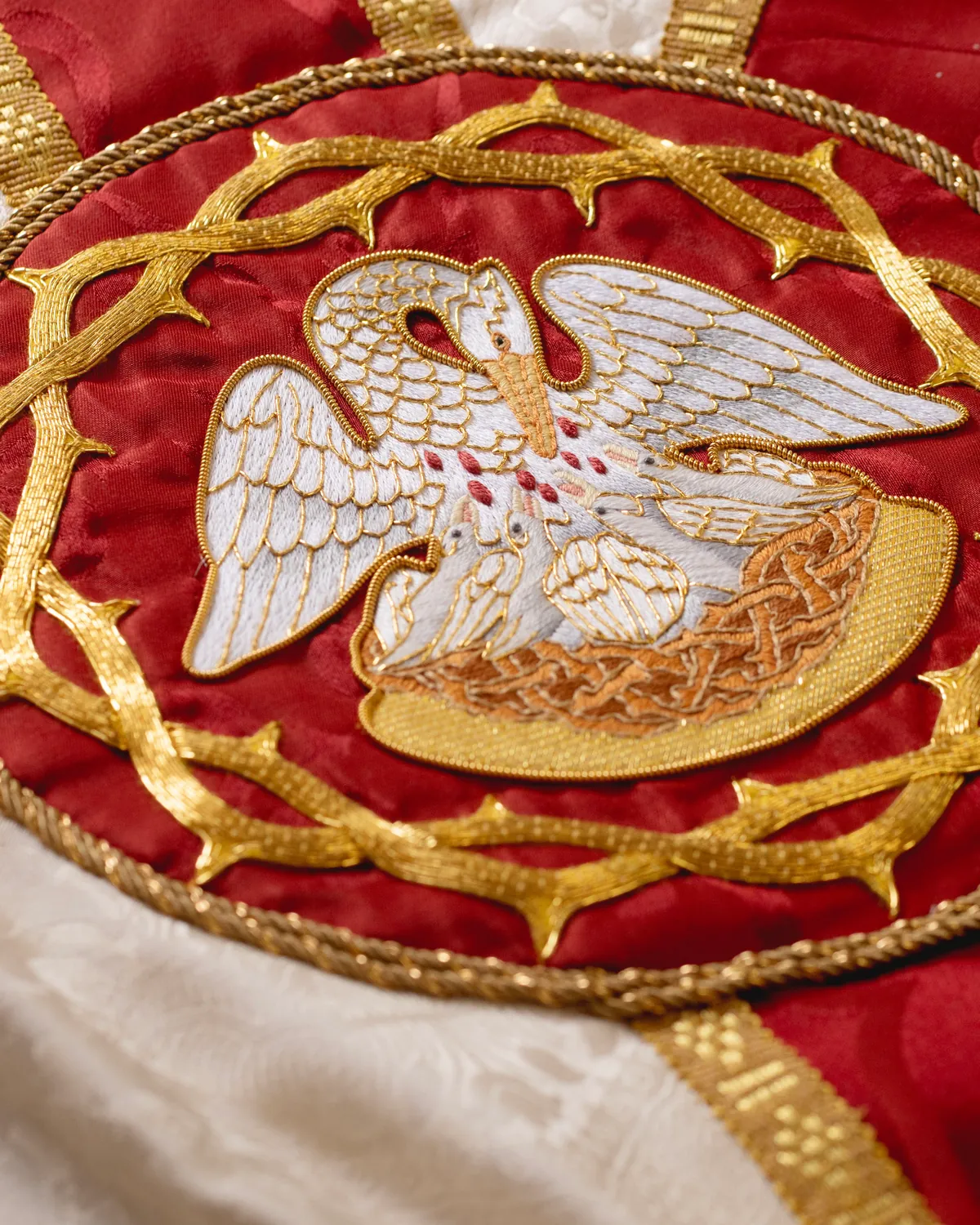
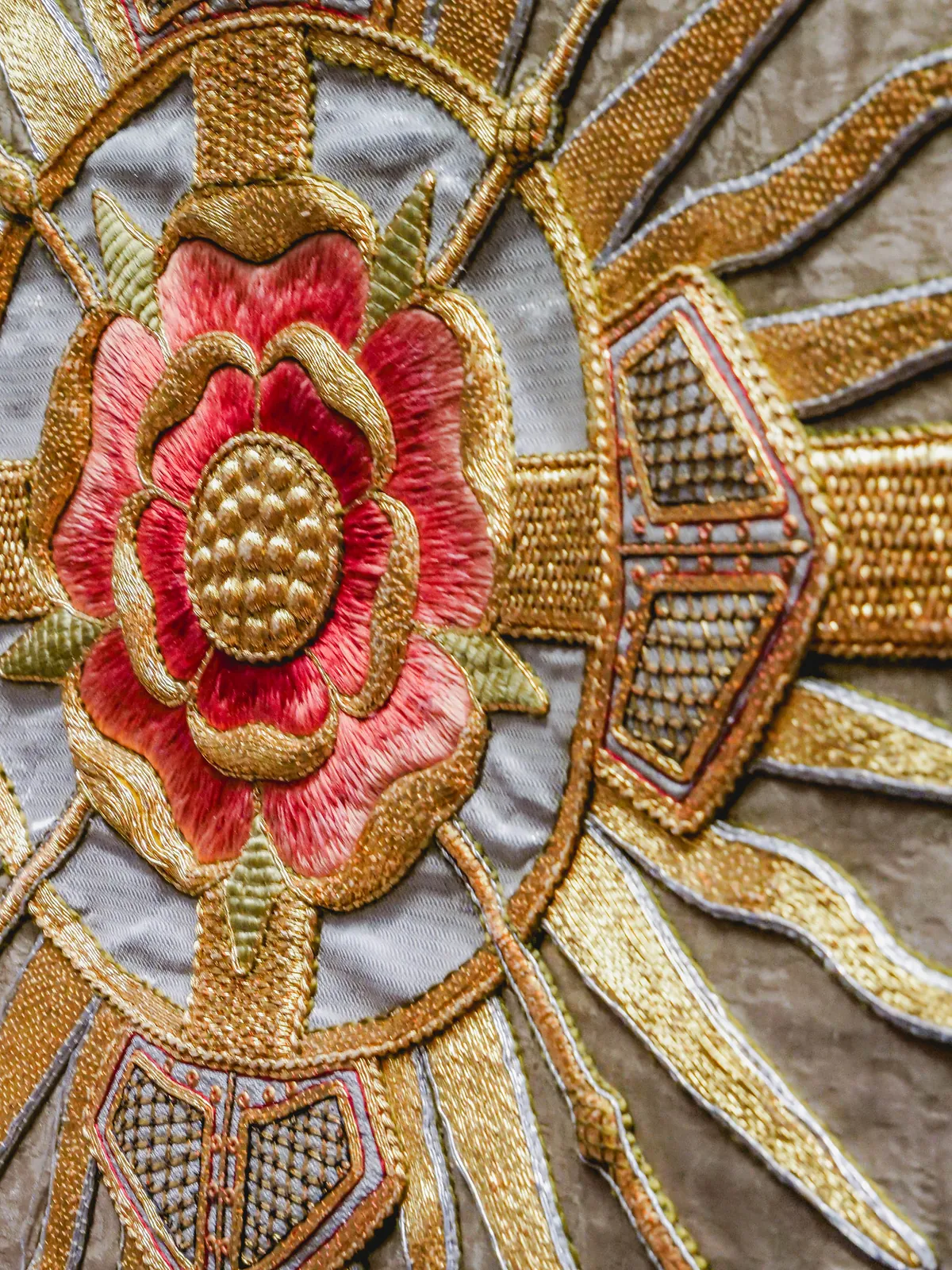
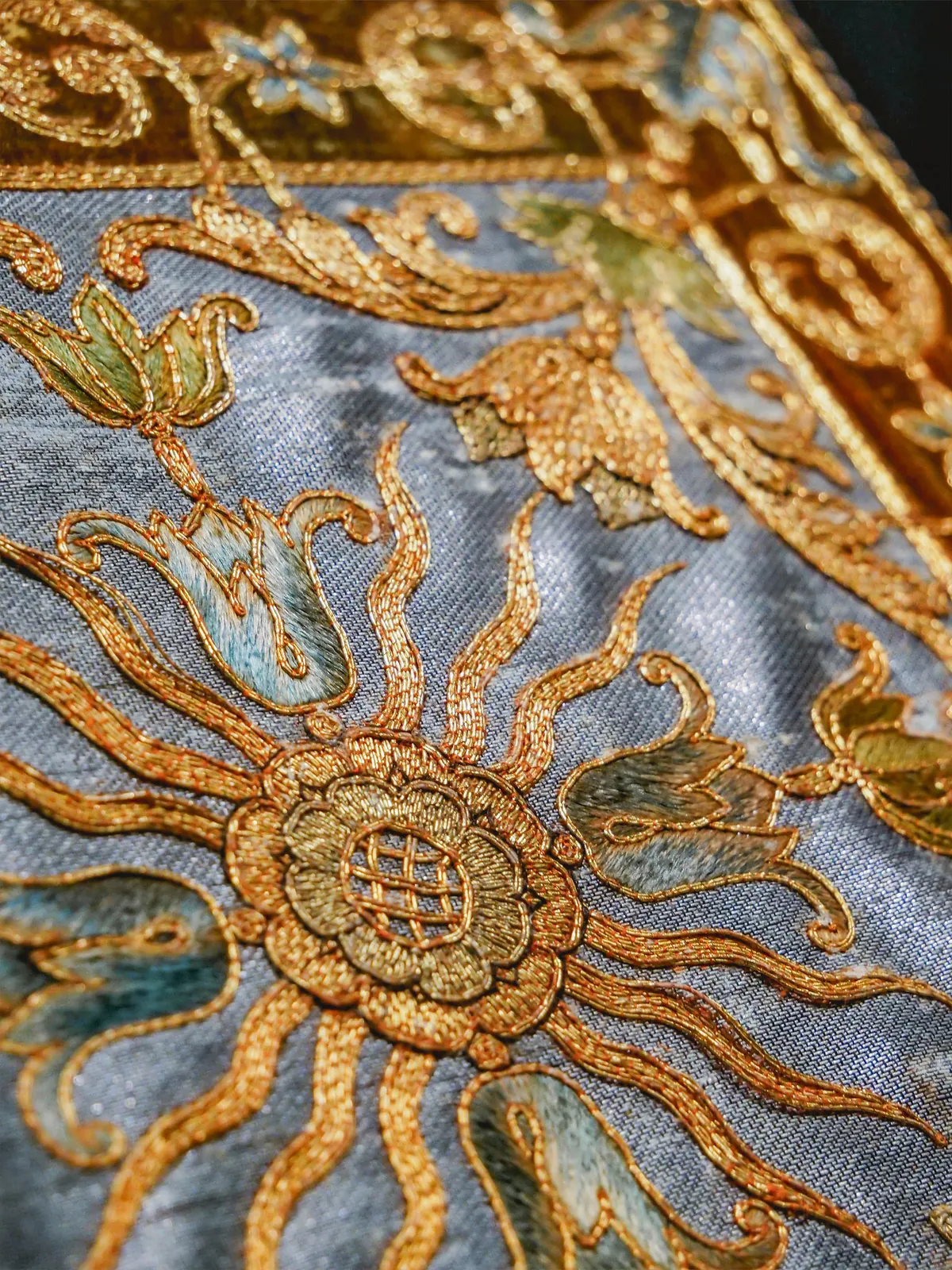
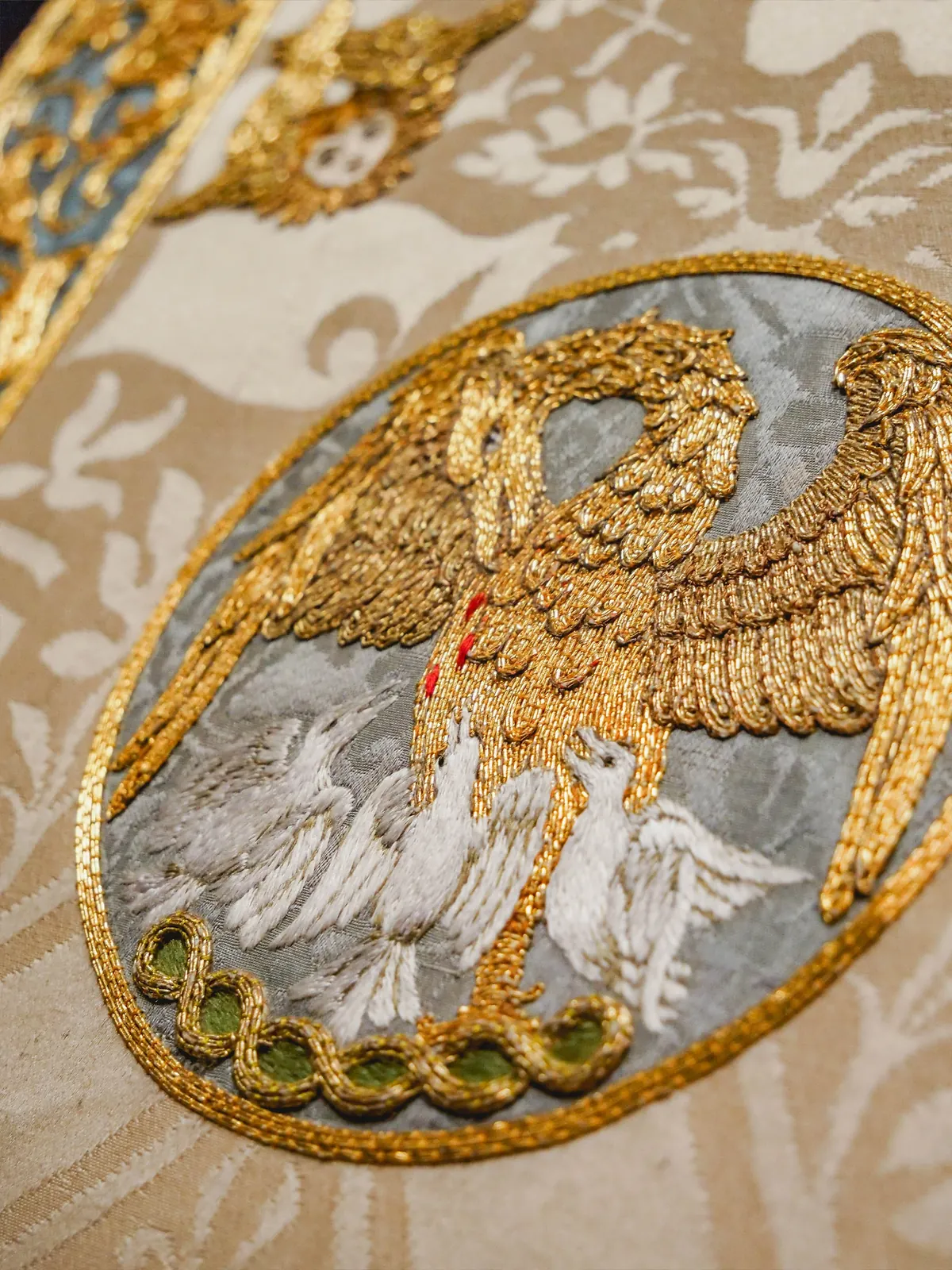
The pelican, which in medieval legend feeds her young with her own blood, is an old Christian symbol of Christ’s sacrifice, and a favourite subject for church embroiderers.
Three techniques
Goldwork
Gold, silver or gilt threads laid on rich fabric and held down with tiny stitches. English embroiderers brought it to a peak between about 1250 and 1350, in the work known as Opus Anglicanum, “English work”.
Silk shading
“Painting with a needle”: long and short stitches in graded silks build up faces, animals and flowers. It takes years of training to master.
Appliqué
Shapes cut from one fabric and stitched onto another, with the edges often covered by couched thread. It adds colour, pattern and texture to a design.
Embroidery nearly disappeared in the 1950s, when fashion turned against it and fine work was being thrown away. My grandmother, Elizabeth Hoare, was managing director of the firm then, and saved as much of it as she could.
Every commission at Watts & Co. begins with a conversation, whether you arrive with a finished design or only a question. Explore our hand embroidery
The founders
- George Gilbert Scott Junior: son of Sir George, and designer of the firm’s early furniture and wallpapers.
- George Frederick Bodley: pupil of Sir George and first chairman of Watts & Co.
- Thomas Garner: Bodley’s partner from 1869 and also a pupil of Sir George.
The Scott family behind the firm
- Thomas Scott “The Commentator” (1747–1821): author of the Commentary on the Bible.
- Reverend Samuel King: the relative who introduced Sir George to architecture.
- Sir George Gilbert Scott (1811–78): founder of the dynasty.
- John Oldrid Scott: Sir George’s other architect son.
- Sir Giles Gilbert Scott: Sir George’s grandson, architect of Liverpool Cathedral and later chairman of Watts & Co.
- Elisabeth Scott: architect of the Shakespeare Memorial Theatre.
- Elizabeth Scott (Hoare): my grandmother, who saved the firm from liquidation after the Second World War.
- Richard Gilbert Scott